Thinking Like A Venture Capitalist #4
How a food delivery app I use way too much taught me that loving a product and making money from it are two completely different problems.
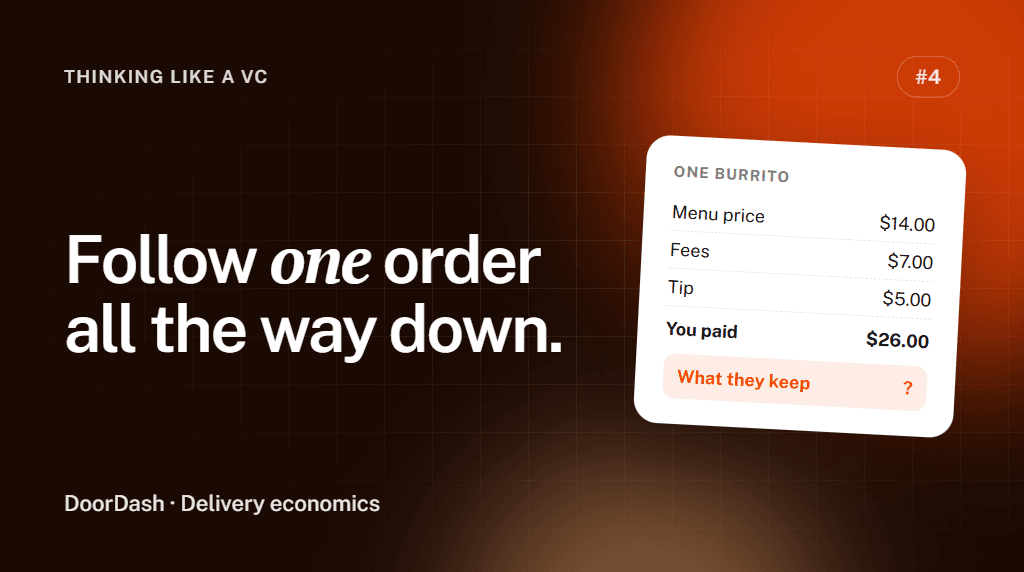
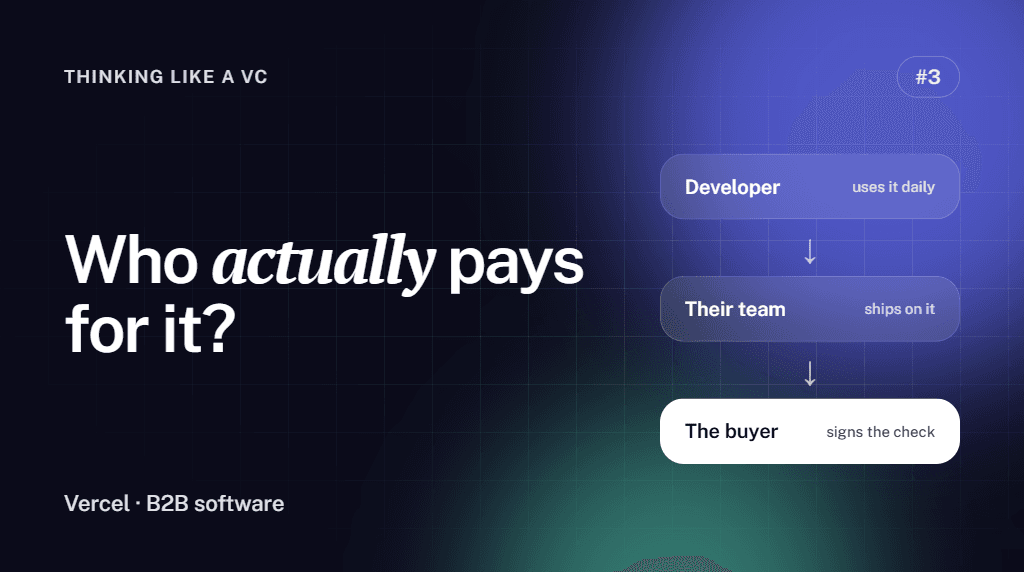
Alright, we are back, and this time I am writing from Manhattan. I made it. I am officially a college student at NYU Stern, and the city is exactly as loud and as expensive as everyone warned me it would be. Last time I looked at Vercel and figured out that in B2B, the person who loves a product is usually not the person who pays for it. But the most important thing I took away from that article was a mistake I caught myself making. I had spent two whole articles asking why users do not leave, and I never once asked what it costs to serve them.
So this time I wanted to fix that. I wanted to pick a company where the product is loved, the retention is obvious, and the real question is whether any of it actually makes money. I did not have to think very hard. If you read the first article in this series, you might remember me admitting that my bank statements are basically a long trail of DoorDash, Grubhub and Uber Eats orders. Moving to New York has not helped. If anything, it has made it worse.
The Company I Assumed Was Printing Money
Before I did any research, I assumed DoorDash was one of the most profitable companies on the planet. Think about it from the customer side. I pay for the food. I pay a delivery fee. I pay a service fee. Sometimes I pay a small order fee. Then I tip. By the time I check out, a 14 dollar burrito somehow costs me 26 dollars. I genuinely thought DoorDash was keeping most of that difference and swimming in cash.
Then I looked it up. DoorDash was founded in 2013 and went public at the end of 2020. It lost money for years. It did not post its first full year of profit until 2024, more than a decade after it started. A company that takes that many fees from me on every single order took eleven years to actually make money. That was my Freakonomics moment for this article, and it is exactly the kind of thing I would have missed if I had only asked my old question about retention. Nobody was leaving DoorDash. It still was not making money.
Following One Order
So I tried to do something I have never done before, which is follow a single order all the way down. Let us go back to my 26 dollar burrito. A big chunk of that money never belonged to DoorDash in the first place. The restaurant gets the menu price, minus a commission that DoorDash charges them for being on the app. The Dasher gets paid for the delivery, and they get the entire tip. What is left over for DoorDash is not the gap between 14 and 26 dollars. It is a slice of the commission and a slice of the fees, minus the cost of paying Dashers, minus credit card fees, minus customer support, minus refunds when my order shows up cold, minus the marketing that convinced me to download the app in the first place.
Investors have a name for the part DoorDash actually keeps. It is called the take rate, which is just the percentage of each order that ends up as the company's revenue. The total money flowing through the app is enormous, tens of billions of dollars a year, but only a small percentage of that becomes revenue, and an even smaller percentage survives after all the costs of delivering the order. When I finally understood this, the eleven years of losses made a lot more sense. The app was not greedy. It was thin.
Why Scale Actually Matters Here
This is where the Vercel lesson came back in a different form. With Vercel, I worried that every new user costs money to serve. DoorDash has the same problem, except it is physical. Every order needs an actual human on an actual scooter driving across an actual city. You cannot copy and paste a delivery the way you can copy and paste software. So how does a company like this ever get profitable?
The answer is density. When there are enough orders in one neighborhood, a Dasher spends less time driving empty and more time carrying food. They can pick up two orders from the same block. They wait less at restaurants. Every minute saved on every order adds up to real money across millions of deliveries. That is why DoorDash fought so hard to win suburbs and smaller cities early instead of only fighting over places like Manhattan. Being the default app in a place where your competitors are weak means your orders are packed closer together, which means each one costs less to deliver. In software, scale mostly helps you grow. In delivery, scale is the only way the math works at all.
DashPass is the Streak
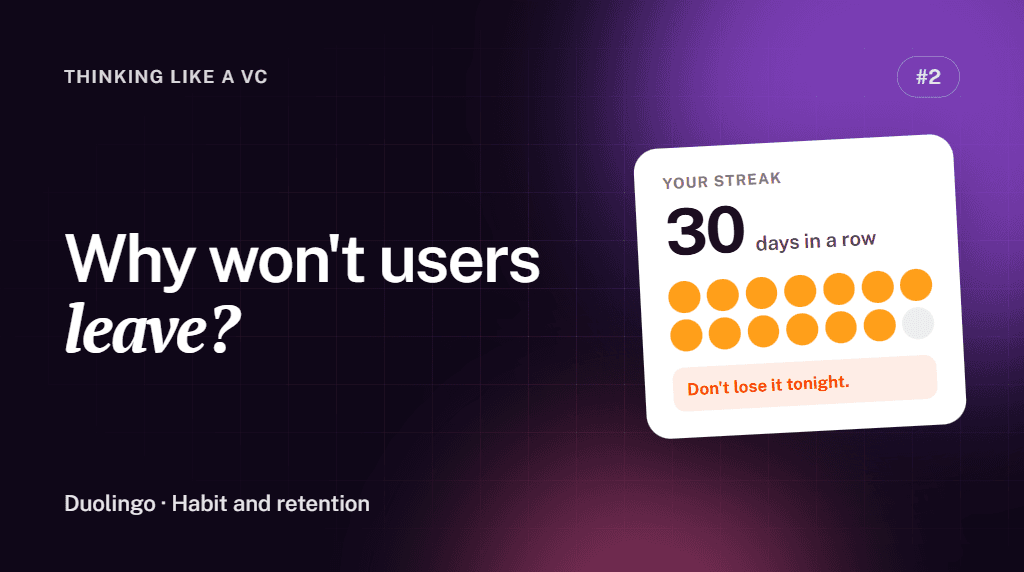
The other thing I found was a lot more familiar. DoorDash has a subscription called DashPass. You pay a monthly fee, around 10 dollars, and you get free delivery and lower service fees on eligible orders. At first I thought this was just a discount. Then I realized it is the Duolingo streak wearing a different outfit. Once you are paying for DashPass, every order you place somewhere else feels like you are wasting money you already spent. It is a sunk cost, and it pulls you back to the same app every time you are hungry.
But this time I looked at it with the Vercel lesson in mind, and I saw the other side too. DashPass members order more often, which gives DoorDash more density, which makes every delivery cheaper to complete. The subscription fee is predictable money that shows up whether or not you order that week. So DashPass is not just a retention trick. It is a margin tool. It is the first time in this series I found a single feature that answers both of my questions at once. Why will users not leave, and how does the company make money serving them.
The Question I Still Have Not Asked
Here is the mistake I caught this time. I spent this entire article looking at DoorDash like it exists alone. It does not. Every time I open DoorDash, Uber Eats is one tap away on the same phone. A lot of the Dashers who deliver my food are also driving for Uber Eats at the same time, switching between apps depending on which one pays more. Restaurants are on both. I can price check between them in about ten seconds. I analyzed the economics of one company without thinking about the fact that its drivers, its restaurants and its customers are shared with its biggest rival.
That changes everything about how I would value it. If two companies are fighting over the same customers, the same drivers and the same restaurants, then a lot of the money they make can get spent just trying not to lose to each other. Promotions, driver bonuses and lower commissions all come out of that thin slice I described earlier. I did not look at any of that. I looked at the order. I did not look at the market.
Moving Forward
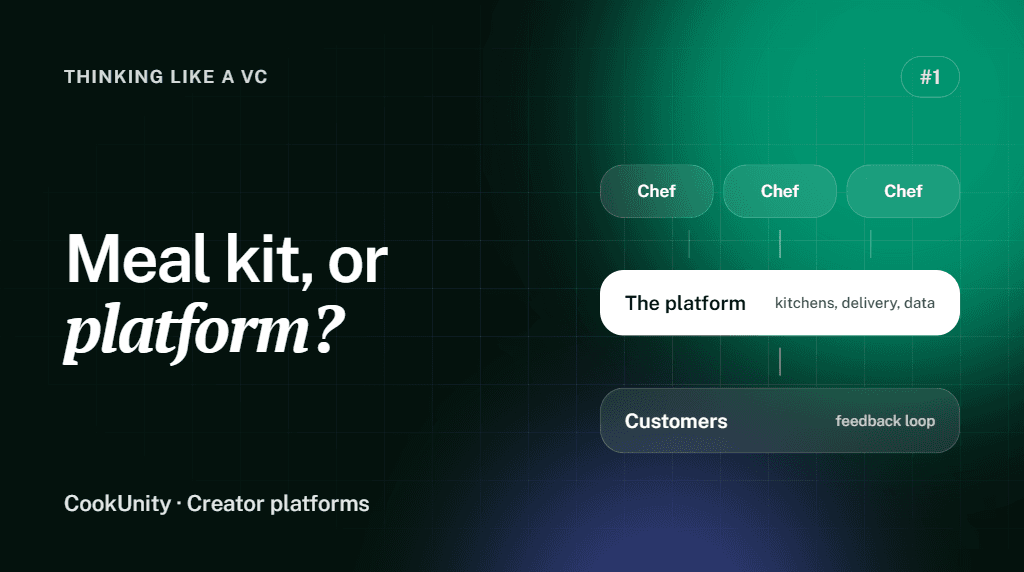
Four articles in, I finally feel like I have the start of a real checklist. From CookUnity, I learned to ask what barrier a company removes for the people building on top of it. From Duolingo, I learned to ask why users will not leave. From Vercel, I learned to ask who actually pays and what it costs to serve them. From DoorDash, I learned to follow a single transaction all the way down until I know how much the company actually keeps. Every one of those questions came from a mistake I made in the article before it, which is honestly the best part of doing this in public.
Now I am on campus, and the goal from the very first article is still the same. I want to get into SVS, sit in the room where people take businesses apart, and actually know what I am looking at. Next time, I want to fix the mistake I just made. I want to look at a market where two giants are fighting over the same customers and figure out how an investor decides which one to bet on.
Keep building, but follow the money all the way down.